FOR UNDERGRADUATE
What are the research fields of "Laser Cooling" and "Quantum Optics"?
This field utilizes cutting-edge optical and quantum control technologies to manipulate atoms and light at the ultimate quantum level, thereby generating and studying completely new quantum states of light and matter.
It is also an extremely fascinating field, demonstrating significant impact when applied to precision measurements in areas such as fundamental physics. Furthermore, the field progresses through a very close interaction between theoretical and experimental research.
While our laboratory primarily focuses on experimental methodology, our approach involves advancing experiments while continuously studying and researching the accompanying theory.

Else
Coursework & Research Projects
Information for Graduate Study
RESEARCH
01
QUANTUM SIMULATION
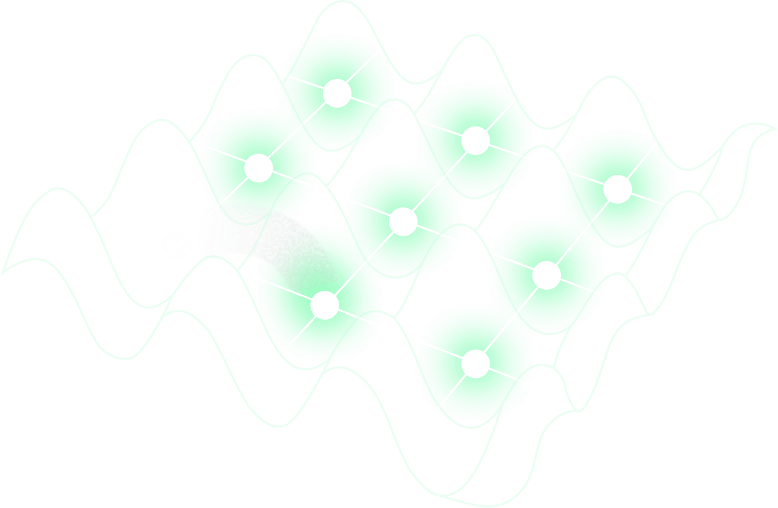
Due to their excellent controllability, a system of ultracold atoms loaded into an optical lattice is considered as an ideal quantum simulator for strongly correlated quantum many-body systems. In our laboratory, by working with ytterbium atoms, we have studies the SU(N) Hubbard model, qunatum gas mixtures, non-equilibrium quantum dynamics, open quantum systems with controlled dissipation, and the development of quantum gas microscopy, and so on. We continue to pursue unique possibilities with this system.
02
PRECISION MEASUREMENT
We explore new physics beyond the Standard Model through precise spectroscopy of ultracold ytterbium atoms trapped in optical lattices and optical tweezers arrays, leveraging the unique properties of ytterbium atoms that are highly sensitive to new physics. Our research includes searching for new particles via precise isotope shift measurements, test of Lorentz invariance, precision measurement of CP-violating magnetic quadrupole moment, and dark matter search using Rydberg atoms.

03
QUANTUM COMPUTATION
Our goal is to build a quantum computer using ultracold ytterbium atoms. We capture and arrange atoms one by one by using optical tweezer array technology, and precisely manipulate their quantum states to achieve high-fidelity quantum gates. A system of ultracold ytterbium atoms offers long coherence times and high controllability, making it ideal for realizing fault-tolerant quantum computers.