

QUANTUM COMPUTATION
OUTLINE
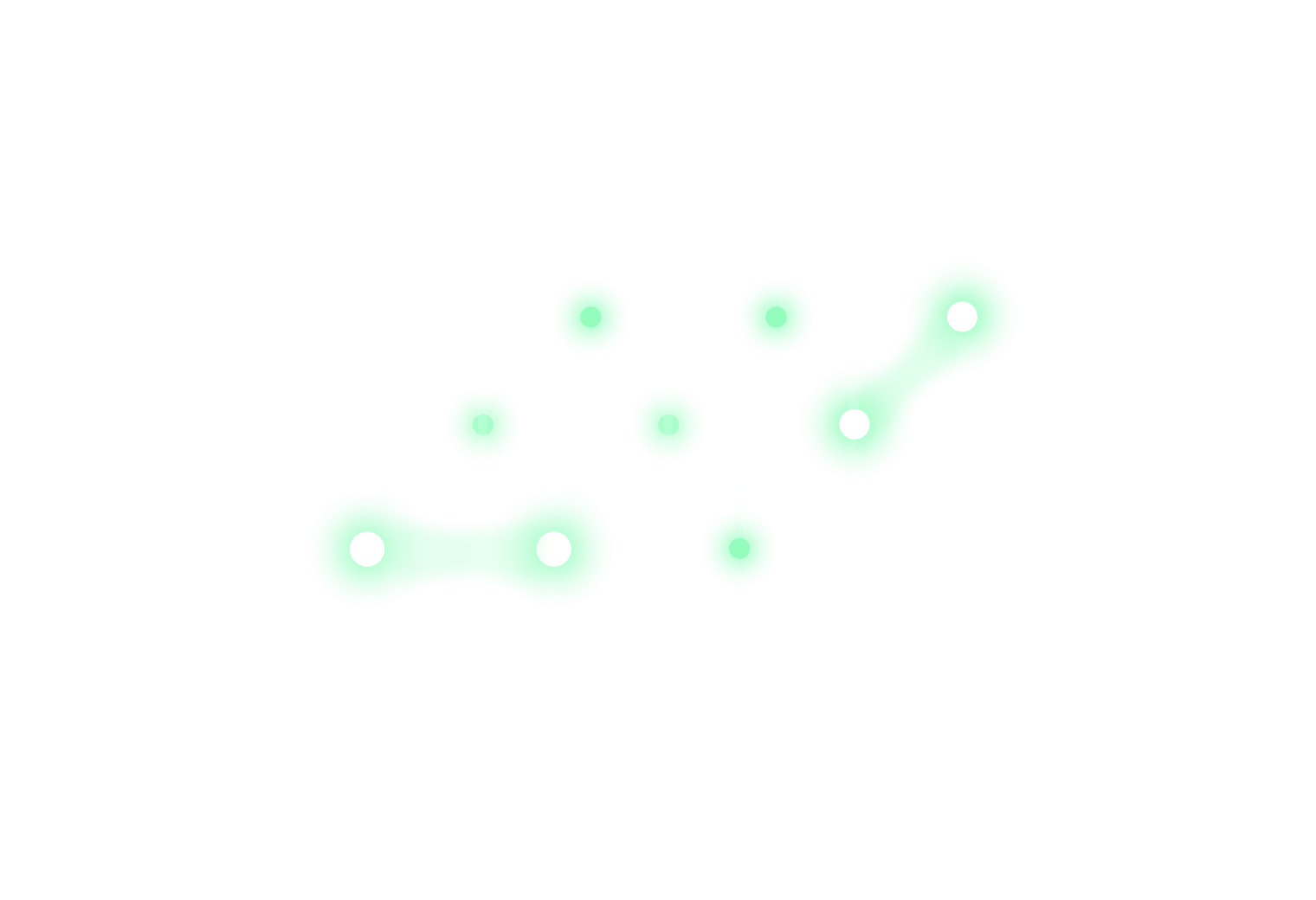
Quantum computation with cooled neutral atoms
Research and development for quantum computers has been active all over the world in recent years. There are various methods of implementing quantum computers, such as superconducting and ion-trap computers, but those based on laser-cooled neutral atoms are among the most rapidly developing and attracting attention.
Our research project aims to build a quantum computer by trapping, arranging and manipulating individual laser-cooled neutral atoms, which act as qubits, using a technique called optical tweezers arrays.
(01)
OPTICAL TWEEZER ARRAYS
Optical tweezers arrays and their features
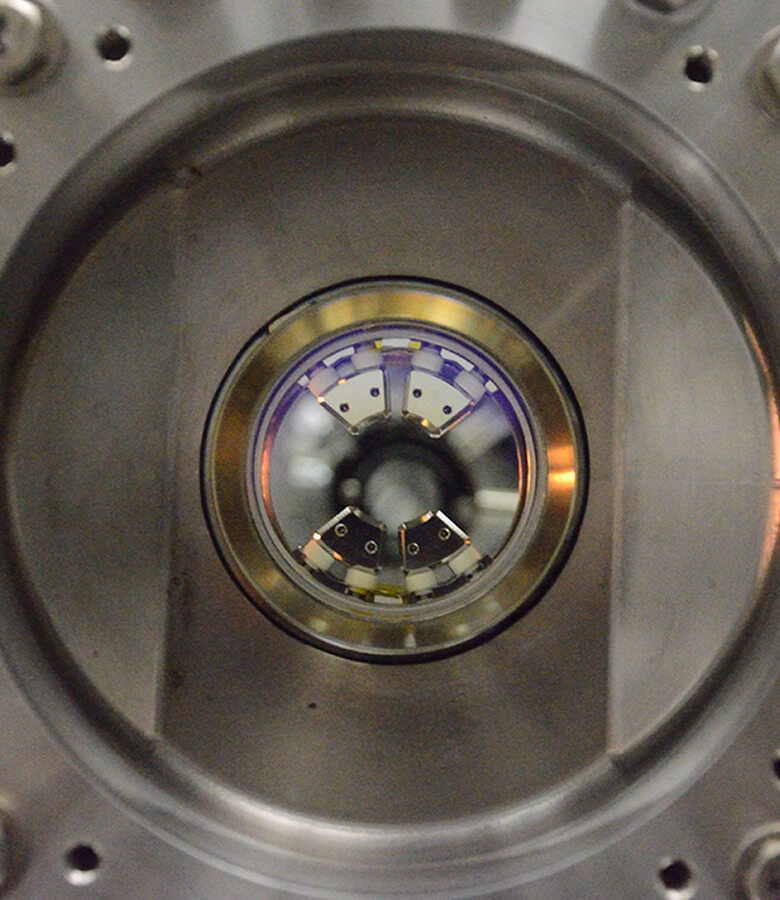
This technique involves focusing a continuous-wave laser strongly in space to trap laser-cooled neutral atoms at its focus.
01
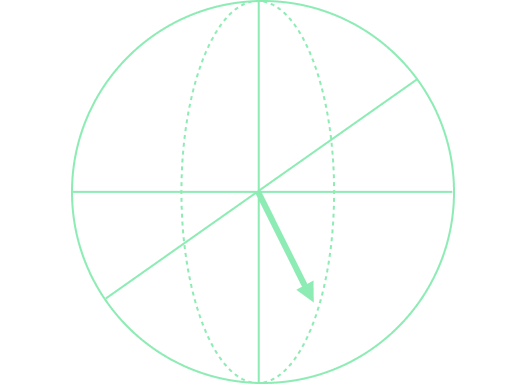
High-precision quantum manipulation
All qubits consist of a single atom and therefore have uniform properties. Furthermore, they are placed in a vacuum and isolated from the external environment, meaning they have a long coherence time and can be manipulated with minimal error.
02
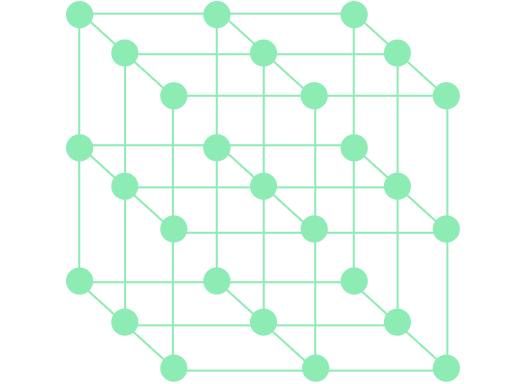
Superior scalability
The spacing of the arrays is only a few micrometres, enabling a large number of qubits to be placed in a small area. In addition, the system size can be increased as the laser power used to create the optical tweezers is increased.
03
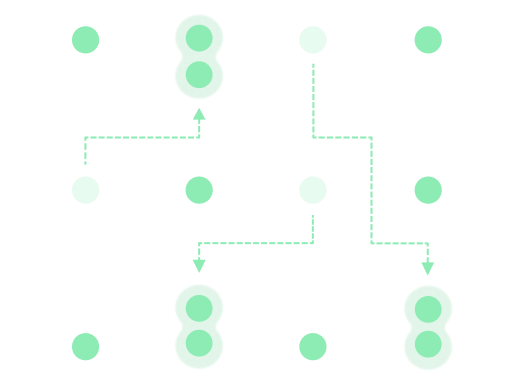
Flexible connectivity
Atoms can be moved dynamically within the array using acousto-optical deflectors to build quantum circuits with arbitrary inter-qubit connectivity.
04
Exploitation of long-range interactions
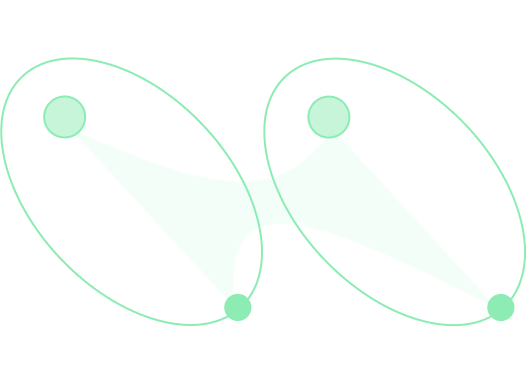
Atoms excited to the Rydberg state exhibit strong Rydberg interactions even at distances of a few micrometres. These interactions can be exploited to realise high-fidelity two-qubit gates and quantum entanglement generation.
(02)
WHY YTTERBIUM?
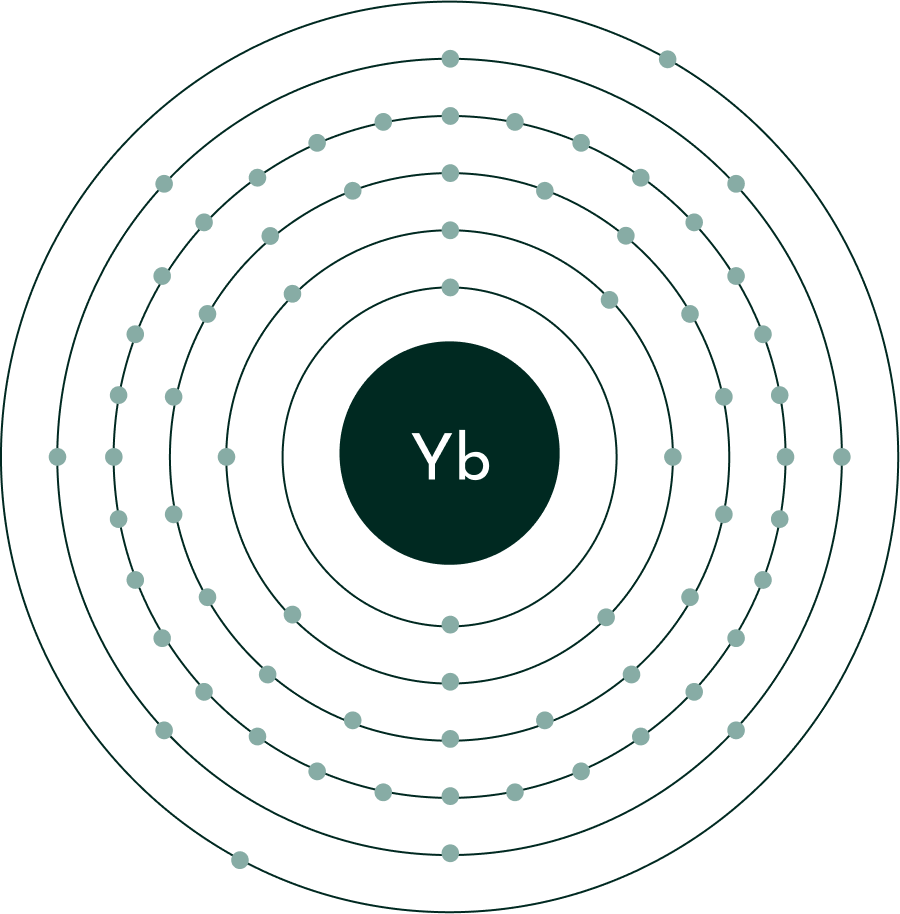
While one-electron atoms such as Rb (rubidium) and Cs (caesium) have been widely used in quantum computing with neutral atoms, our research employs the two-electron atom Yb (ytterbium).
Yb is characterised by its rich internal level structure, which includes spin singlet and triplet states derived from its two valence electrons. Notably, the nuclear spins in the fermionic isotope and the metastable excited states in the bosonic isotope allow for the creation of qubit with much longer coherence times and reduced sensitivity to external disturbances, such as magnetic field noise, compared to single-electron atoms. Additionally, high-fidelity two-qubit gate via single-photon excitation to the Rydberg state and non-destructive qubit measurement, which necessitate sophisticated techniques with single-electron atoms, can be readily achieved.
Thus, Yb is an extremely promising platform for neutral-atom quantum computing, which require high-precision quantum manipulation, due to its superior controllability of quantum states and high design freedom in qubit configurations.
We are currently collaborating with the start-up company Yaqumo. Together, we are developing basic technologies for quantum computers that are more faithful, scalable and faster.
FOR
UNDERGRADUATE
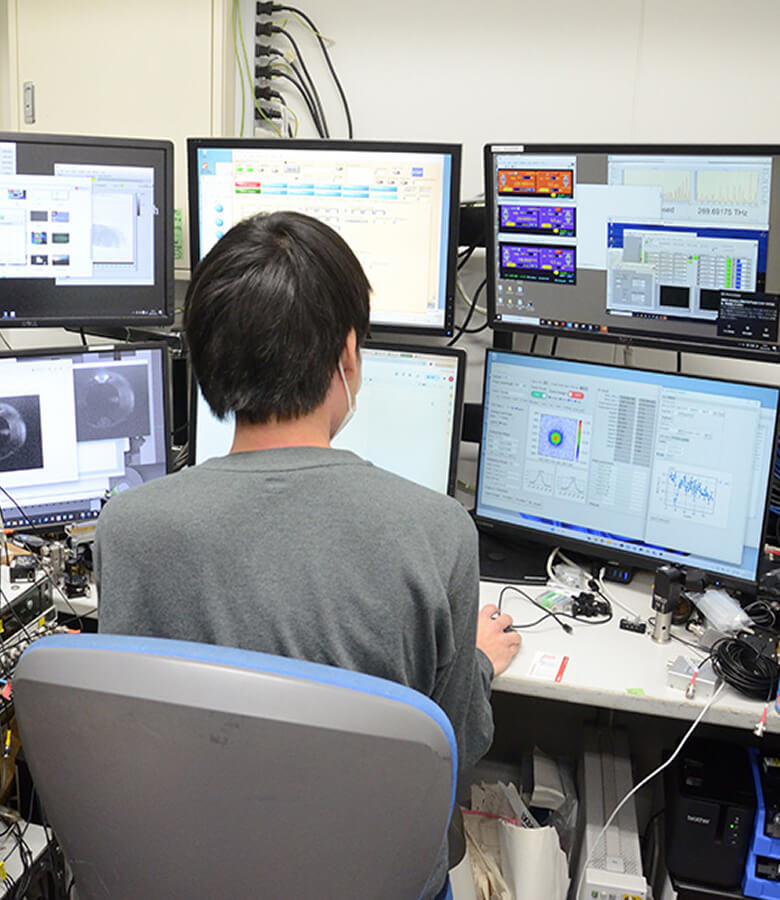
The Quantum Optics Group welcomes undergraduate students who are interested in visiting our group.